

 Fishician®
Aeration and dissolved oxygen: bubbles, circulation and gas exchange
Low dissolved oxygen can become an emergency quickly. Learn how gas exchange, temperature and waste affect the supply.
About this guide
On this page
The short answer
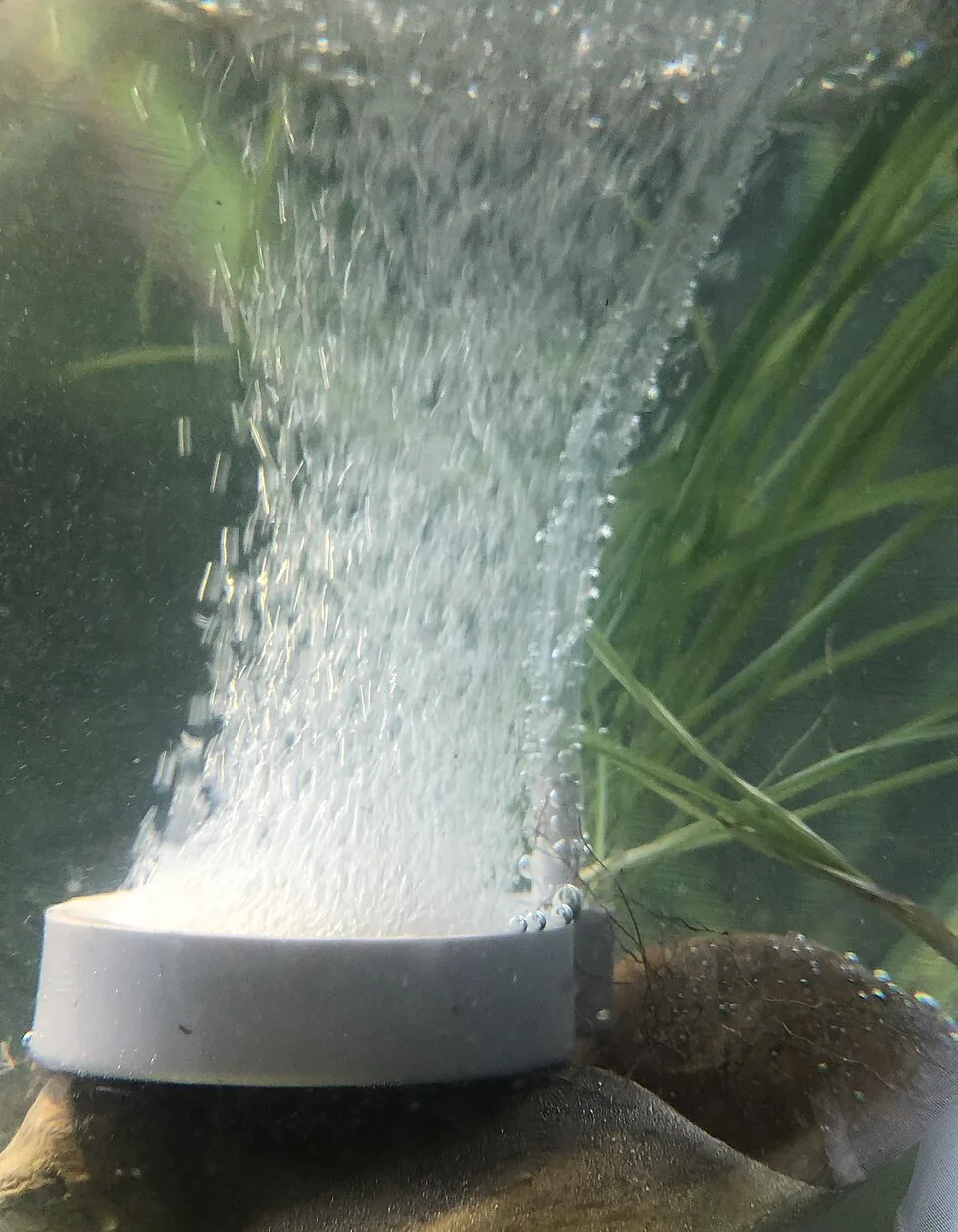
- Aeration supports gas exchange. Oxygen can dissolve from bubbles as they rise. Bubbles also circulate water and disturb the surface.
- Check circulation and the fish, and measure dissolved oxygen when possible. Bubble count alone does not show oxygen concentration.
- Heat hits twice. Warmer water holds less oxygen while fish and bacteria need more. Salt lowers it too.
- Low oxygen is a symptom. Overstocking, overfeeding, decay, a bloom or a stalled filter are the usual causes.
- Fish gasping at the surface? Increase aeration promptly while checking temperature, ammonia, nitrite and equipment. Similar signs have different causes.

What moves oxygen up or down
Raises oxygen
- Surface agitation and turnover
- A clear surface, no heavy film
- Cooler water within the species range
- A second, independent flow source
- Less organic waste
Lowers oxygen
- Rising temperature or salinity
- Heavy stocking and feeding
- Decaying food, plants or a dead fish
- Algae or bacterial blooms
- A stalled filter or sealed lid
Plants and coral help only in the light
- Photosynthesis produces oxygen in suitable light. Respiration uses oxygen both day and night; photosynthesis stops in darkness.
- In planted or algae-rich systems, oxygen often reaches its daily low before lights-on. Maintain gas exchange overnight.
Reading distress
- Signs: gathering at the surface or filter outflow, fast breathing, flared gills, lethargy, not eating.
- Several species at once? More likely the environment than disease.
- Worse before lights-on? Points to the day-night oxygen cycle.
- Started after heat, a power cut, cleaning, a treatment or a big feed? Look there first.
- Adding surface movement is a safe first step while you investigate. It buys time; it doesn't fix the cause.
Build in resilience
- Don't depend on one device. A second powerhead or an air pump on its own circuit keeps oxygen moving if a filter stops.
- Maintain ventilation and surface movement while keeping a secure lid for jumping fish.
- Don't let waste pile up so much that one cleaning releases a big oxygen demand.
- Keep a way to move water by hand for power outages.
- In heat waves, add surface movement and deal with the temperature.
Sources
Each source is listed with the part of this guide it supports.
- Southern Regional Aquaculture Center: Recirculating Systems — Component OptionsDiffused aeration transfers oxygen from rising air bubbles into water, as well as moving water.
- University of Florida IFAS: Dissolved Oxygen for Fish ProductionOxygen solubility against temperature and salinity, metabolic oxygen demand, aeration mechanisms, and low-oxygen signs.
- Merck Veterinary Manual: Management of Aquarium FishAeration and circulation as aquarium-management variables, and water-quality failures that present as respiratory distress.
- University of Florida IFAS: Ammonia in Aquatic SystemsNitrification as an oxygen-consuming process, and the interaction between oxygen supply and biofilter capacity.