

 Fishician®
Aquarium cycling and water testing
A new tank is ready when tests prove it processes waste, not when a set number of days has passed.
About this guide
On this page
The short answer
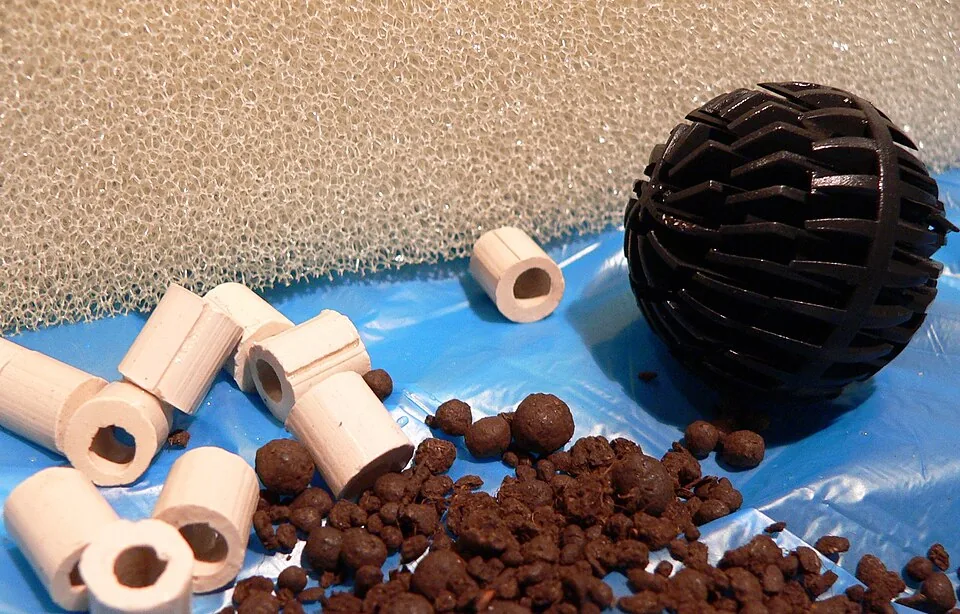
- Cycling grows bacteria. They live on wet, oxygenated surfaces and turn toxic ammonia into nitrite, then into less toxic nitrate.
- Do it without fish. Dose a measured ammonia source made for fishless cycling and follow its label.
- Verify readiness. Follow the product’s dose and test interval. Confirm repeated ammonia and nitrite clearance; plants may prevent nitrate buildup.
- Watch the trend. Log dated results. A trend supports readiness; one abnormal result with fish present still needs prompt attention.
- Fish already in and ammonia shows? Treat it as urgent: verify the reading, check equipment, cut waste, use conditioned water changes.

The nitrogen cycle in your tank
- SourceFish waste & foodBreak down into ammonia
- ToxicAmmoniaHarms fish. Should not be measurable.
- Bacteria convertToxicNitriteAlso harms fish. Should not be measurable.
- Bacteria convertLess toxicNitrateBuilds up over time
- You removeWater changesDilute what builds up
How to cycle without fish
- Set up with conditioned water, filtration, circulation and a stable temperature.
- Add a measured ammonia source made for fishless cycling. Don't mix products or dose from memory.
- Test ammonia and nitrite regularly. Nitrate shows progress but doesn't replace them.
- Record dated results.
Read the numbers
What a healthy cycle looks like
- 1Ammonia risesFrom the dose you add.
- 2Nitrite appears, ammonia fallsThe first bacteria are working. This is progress.
- 3Nitrate appears, nitrite fallsThe second stage is working.
- 4ReadyEach dose clears with no measurable ammonia or nitrite.
A line that stays flat for a long stretch means something is holding the bacteria back.
Why a cycle stalls
- Low oxygen or weak flow. The bacteria need oxygen.
- pH sliding down. The bacteria use up alkalinity, so poorly buffered water drifts.
- Cold water. Everything slows.
- Media removed or replaced mid-cycle.
- Too much ammonia. A very high reading can stall the process; it may need dilution, not patience.
- Untreated tap water. Chlorine and chloramine kill these bacteria too.
- A bad test. Check expiry, sample size, lighting and droppers first.
Make results trustworthy
- Follow the exact kit's steps for timing, shaking and reading. How to use a test kit.
- Record the unit. Whole-compound and nitrogen-only ammonia readings are not interchangeable.
- Repeat surprising results before chemical adjustments; do not delay aeration or urgent investigation when fish are distressed.
- Test your tap water too; it can carry ammonia or chloramine.
Shortcuts that work, with limits
- Bottled bacteria may help establish a biofilter; effectiveness depends on the product, storage and tank conditions. You still verify with tests.
- Mature media or rock from a tank you trust brings real bacteria, and whatever else that tank carries. See quarantine.
Sources
Each source is listed with the part of this guide it supports.
- University of Florida IFAS: Ammonia in Aquatic SystemsAmmonia production, nitrification, biofilter requirements, testing, oxygen, alkalinity, and corrective context.
- Merck Veterinary Manual: Management of Aquarium FishFishless cycling, new-tank syndrome, water testing, and biofilter establishment.
- University of Florida IFAS: Fish Health Management in Recirculating SystemsWater-quality parameters, source-water risks, nitrifying bacteria, and recirculating-system biofiltration.