 Fishician®
Starting a freshwater aquarium
Freshwater is the lower-cost, more forgiving entry point into the hobby — but "forgiving" still means following the sequence, not skipping it.
Why freshwater is usually the recommended starting point
Freshwater systems are typically less expensive to set up, tolerate a somewhat wider margin of error in water chemistry for many common species, and do not require salt mixing or salinity measurement. That margin is real but not unlimited — the fundamentals in the beginner setup guide still apply in full, and a freshwater tank can still fail from the same causes as any other: skipped cycling, overstocking, and inconsistent maintenance.
Know your source water before anything else
Municipal freshwater supplies commonly contain chlorine or chloramine, either of which needs a conditioner rated for it before the water touches fish. Well water can carry different chemistry — sometimes unusual hardness, sometimes dissolved gases — that a municipal-focused conditioner does not address. Test your actual tap water once before you rely on it, rather than assuming it matches a generic description.
Cycle with a plan, not a countdown
A fishless cycle using a controlled ammonia source, verified with testing rather than a fixed number of days, is the safest path to a functioning biofilter. The full method, and how to make your test results trustworthy, is covered in the cycling and water testing guide — follow it before livestock goes in, not as an afterthought once fish are already present.
Choose a stocking plan before you choose fish
Decide on adult sizes, social requirements, and water-parameter overlap for every species you want before buying any of them, using the stocking and compatibility guide. Popular freshwater community species — many tetras, rasboras, corydoras, and similar schooling fish — need appropriately sized groups, not one or two individuals, and a plan built around adult requirements avoids the common trap of stocking for a tank full of juveniles.
Equipment that freshwater setups typically need
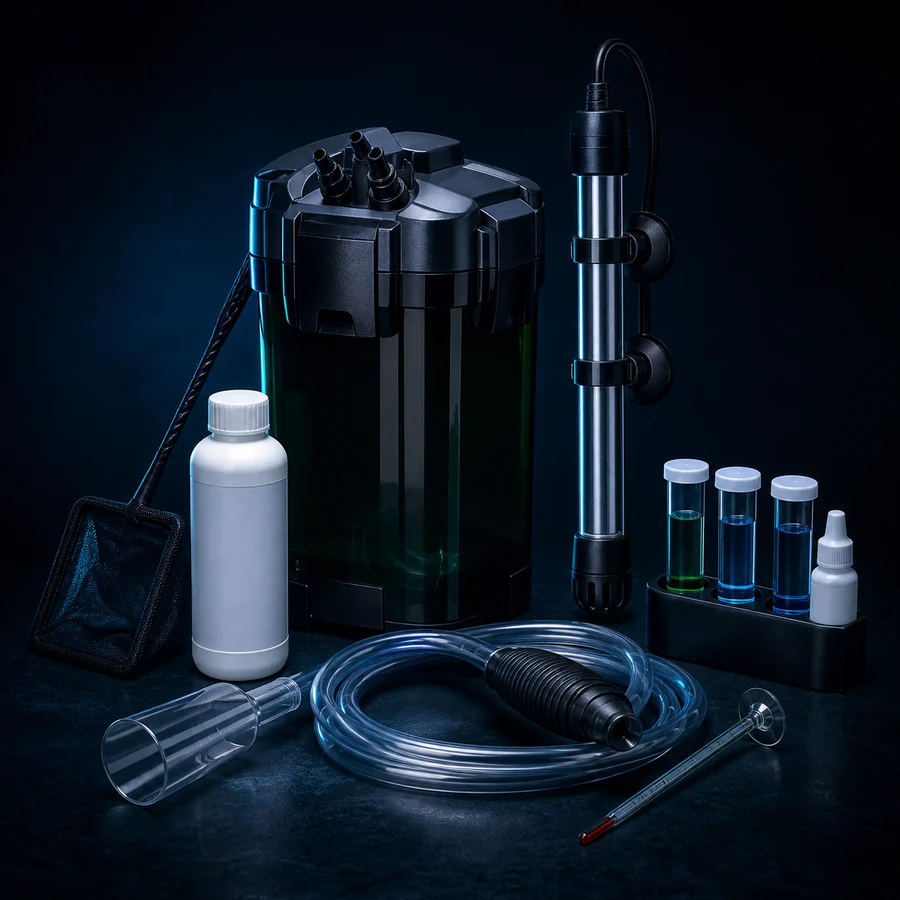
- Filtration sized to the aquarium and the planned stocking — see the filtration guide for how to judge capacity beyond a flow number.
- A heater for the great majority of popular freshwater species, which are tropical. A handful of coldwater species are genuine exceptions; confirm before assuming you can skip one.
- A secure lid, since many freshwater fish jump.
- A basic freshwater test kit covering ammonia, nitrite, nitrate, and pH at minimum.
Add livestock gradually, and quarantine if you can
Stock in a planned order rather than filling the tank in one trip, test more frequently after each addition while the biofilter adjusts, and quarantine new arrivals where your setup allows it. A spare seeded sponge filter is inexpensive insurance and doubles as a way to start a quarantine system quickly when you need one.
Where freshwater tanks usually run into trouble
The most common early failure points are adding fish before the cycle is verified, stocking for the fish's current juvenile size instead of its adult size, overfeeding, and skipping routine water changes because the tank "looks fine." None of these require expensive equipment to avoid — they require following the sequence in this guide set in order.
Sources and further reading
Each source is listed with the part of this guide it supports. Source scope matters: a taxonomy record, product label, or general husbandry page does not automatically support every care claim.
- University of Florida IFAS: Responsible Aquarium Fish Ownership
Pre-purchase research, source-water evaluation, and planning for a new aquarium's long-term needs. - Merck Veterinary Manual: Providing a Home for Fish
Equipment, water preparation, and environmental setup for a new freshwater aquarium. - Merck Veterinary Manual: Management of Aquarium Fish
Cycling, gradual stocking, and common early-setup failure points.