

 Fishician®
Substrate and hardscape: the parts of the aquarium that keep acting after you install them
Sand, rock and wood are picked for looks, but they change your water, hold much of the biofilter and shape how fish behave.
About this guide
On this page
The short answer
- Substrate is a chemistry choice. Carbonate materials raise hardness and alkalinity; some plant soils lower pH.
- Match it to your fish, not the other way round. Decide the water they need first.
- Rock and wood carry the biofilter. Removing a lot at once is a biofilter event. Stage it.
- Layout is behaviour. Territorial fish need visual breaks, shy fish need cover, swimmers need length.
- Check material safety before use. A soak test can reveal chemistry changes but cannot rule out toxins or contamination.

What your substrate does to the water
Inert
- Doesn't change chemistry
- Provides surface area
- Most sands and gravels
Raises hardness
- Aragonite, crushed coral, limestone
- Resists pH drops
- Good for hard-water fish
Lowers pH
- Some planted soils
- Strongest in early weeks
- Good for soft-water fish
Grain size and depth
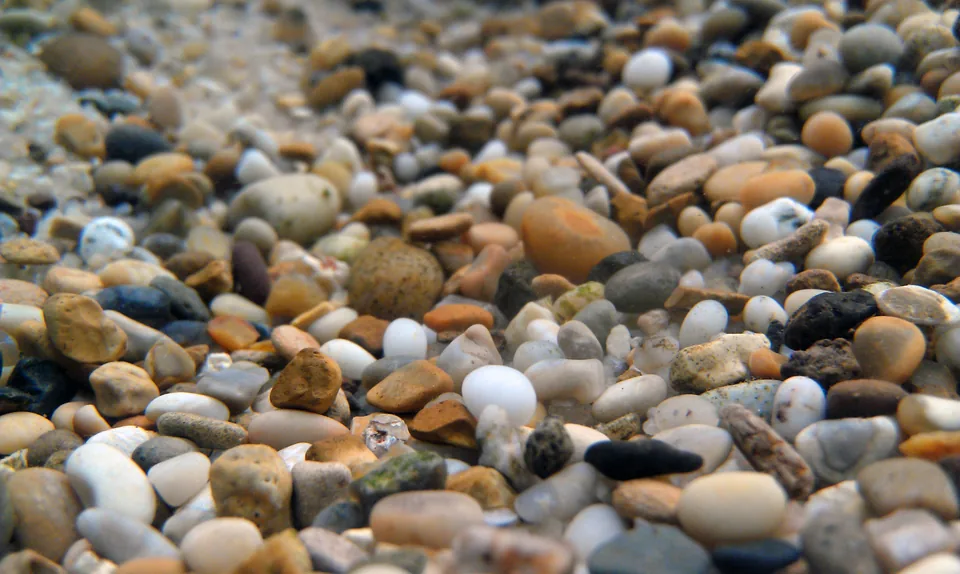
- Fine sand keeps debris on top where you can siphon it.
- Coarse gravel lets waste sink out of reach until it's disturbed.
- Deep, still beds can develop low-oxygen pockets. Clean them in sections, never all at once.
- Sifting and burrowing species need material that won't scratch them.
Build a stable layout
- Rest rock on the tank floor or a stable base, not on loose sand that diggers can undermine.
- Avoid pressure against the side panes; follow the tank maker’s guidance for supporting heavy structures.
- Leave room for a siphon and a net, or you'll stop maintaining it.
- A layout that fails the fish can sink a stocking plan that looked fine on paper. See stocking.
Prepare materials first
- Rinse substrate until the water runs clear, unless the maker says not to (many plant soils).
- Wood often needs soaking or weighting and releases tannins that tint water. See cloudy water.
- Unknown or collected material may contain contaminants. A pH or alkalinity soak test cannot establish safety; use material with known aquarium suitability.
- Nothing cleaned with household detergent; a rinse doesn't guarantee it's gone.
Diggers and plants
- Burrowing fish and sand-sifting invertebrates need fine, smooth material.
- A bare bottom takes away a behaviour they are built to perform.
- Rooted plants need a bed that anchors them and often feeds them.
- Rock sitting on loose sand becomes unstable once diggers move in.
Sources
Each source is listed with the part of this guide it supports.
- Merck Veterinary Manual: Providing a Home for FishSubstrate, decor, territory, hiding places, and the surfaces that carry beneficial bacteria in an aquarium.
- University of Florida IFAS: Ammonia in Aquatic SystemsAlkalinity and pH interaction with dissolved chemistry, relevant to substrates and rock that dissolve into the water.
- University of Florida IFAS: Fish Health Management in Recirculating Systems, Part 1Solids capture, settled organic material, and the biofilm surfaces that support nitrifying bacteria.