

 Fishician®
Acclimation: matching an animal to water it has never been in
Acclimation isn't a stopwatch ritual. It's closing gaps in temperature and chemistry, carefully in proportion to their size.
About this guide
On this page
The short answer
- The bag is a fouling mini-tank. Waste and CO2 can accumulate during transport. Lower pH reduces the toxic ammonia fraction but does not make fouled water safe.
- Opening it changes that. As CO2 escapes, pH can rise and increase the toxic ammonia fraction. Avoid prolonged acclimation in fouled transport water.
- Temperature first, by floating the sealed bag. Then chemistry, gradually, in proportion to the gap.
- Bag water never goes in your tank. Transfer with a suitable net or container for the species, minimizing transport water.
- Watch the fish, not the clock. If it is struggling, promptly use prepared holding water matched to its current temperature and chemistry; avoid an abrupt large change.
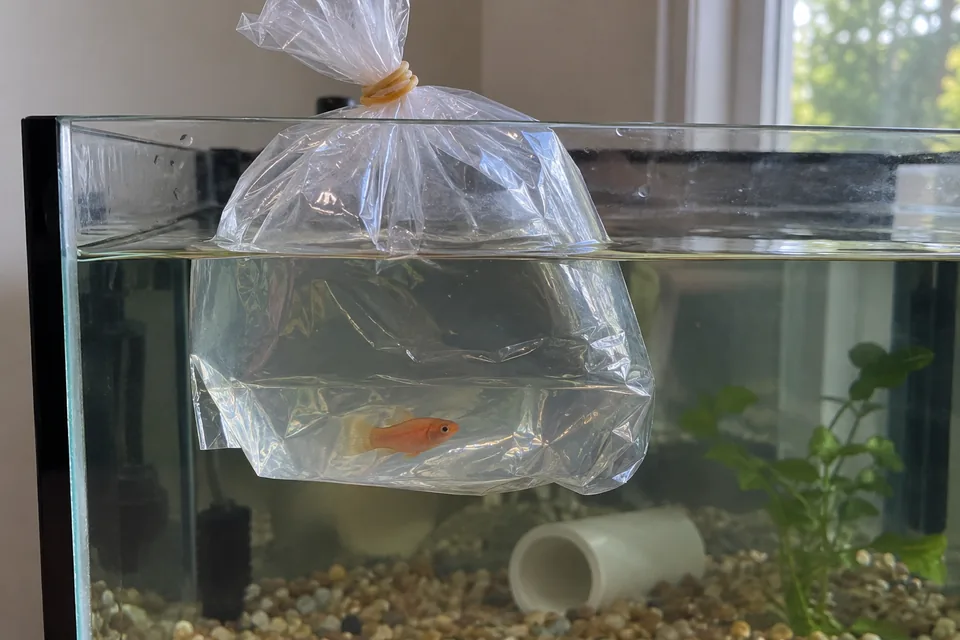
Acclimation in four moves
- Float the sealed bagOut of direct light; temperature evens out
- Measure the gapSalinity, pH and hardness, if you can
- Add tank water graduallySlower for a bigger gap, faster if the bag is fouled
- Transfer with suitable equipmentBag water goes down the drain
Balance the two pressures
- A big chemistry gap argues for going slower; a fouled bag argues for going faster.
- When both are bad, move the fish into a prepared holding container of matched water rather than stretching its time in bag water.
- Ask the shop for their salinity and pH. It beats a generic procedure.
- Sensitivity varies by species, life stage and the size of the change; check species-specific acclimation needs.
Warning signs during acclimation
- Loss of balance or gasping needs urgent attention. Use prepared, aerated holding water matched to the fish’s current conditions while arranging help.
- Colour loss and hiding are common and not alarming on their own.
After it's in
- Low light, cover to hide in, little disturbance.
- Don't feed right away unless it's looking for food.
- Clean nets and containers that touched bag water, or keep them dedicated to one tank.
- Test more often: new fish add waste to a filter balanced for fewer. Log date, source and species.
- Better still, acclimate into a quarantine tank first. Compare against normal behaviour.
Before the fish arrives
- The destination tank is stable, with cover to hide in and light you can dim.
- Prepared, matched water is ready, with a dedicated net and container.
- You know where the fish goes if it arrives unwell.
- Ask how long it has been in the bag. Longer transit means more waste in the water.
Sources
Each source is listed with the part of this guide it supports.
- University of Florida IFAS: Fish Fingerlings — Purchasing, Transporting, and StockingTransport-bag chemistry, temperature and chemistry matching on arrival, handling stress, and staged introduction.
- Merck Veterinary Manual: Routine Health Care of FishAcclimation, observation of new arrivals, quarantine practice, and preventive husbandry.
- University of Florida IFAS: Fish Health Management in Recirculating Systems, Part 2Biosecurity and pathogen movement between connected systems, including transport water and shared equipment.